
An Incredibly Easy Method That Works For All
10 Apr 2021
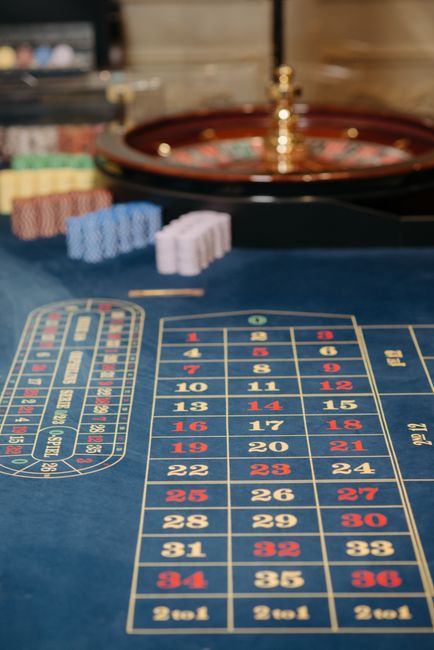
Every gambler has heard the phrase. The house always wins. It is repeated like a mantra in casinos, forums, and family interventions, usually right before someone explains why you should not bet your rent money on red. But here is the thing nobody tells you: the house only always wins in the long run, and the long run is a lot longer than most people think. In the short term, variance is a wild animal that does not care about house edges, probability theory, or your rent. Understanding that gap between expectation and reality is the single most useful thing you can do as a player, whether you are spinning slots, grinding poker tables, or chasing a parlay on a Sunday afternoon.
Let us start with the math most people get wrong. A typical slot machine has a return to player (RTP) somewhere between 94% and 97%. That sounds brutal, and it is, but only if you play long enough for the math to flatten out. If you sit down with $100 and spin $1 at a time, you are not guaranteed to lose $3 to $6. You might double your money in twenty minutes. You might lose it all in ten. The house edge is an average, not a promise, and averages require thousands of spins to assert themselves.
This is why casinos can afford to hand out free drinks and comped rooms. They are not gambling on your session. They are banking on the law of large numbers, which says that over millions of spins across thousands of players, the math will hold. You, a single human with a single bankroll, are not the long run. You are a coin flip with a slight tilt.
Poker players talk about variance the way sailors talk about weather. It is not a bug in the game. It is the game. If you get your money in as a 70% favorite and lose, that is not a bad beat in any meaningful sense. That is the 30% showing up, and it will show up roughly three times out of ten.
Here is a concrete example. You are playing a $50 buy-in no-limit hold'em tournament. You shove all-in preflop with aces and get called by K-Q offsuit. You are roughly 82% to win. You will still lose that hand about once every five or six times. If you play 1,000 tournaments, that specific scenario will happen often, and you will lose it often. The players who succeed are the ones who understand that a single result is noise and 10,000 results are signal. Everyone else is posting bad beat stories on Reddit and wondering why the poker gods hate them.
Slots are the purest form of gambling because there is no decision to make after you press the button. You pick a machine, you pick a bet size, and then you watch. That lack of agency is actually liberating for some players and terrifying for others. The RTP is fixed, the volatility is fixed, and the only variable you control is how long you play and how much you stake. If you play a high-volatility slot with a 96% RTP, you might hit a 500x multiplier on your third spin, or you might bleed out over four hours. Both are normal. Both are the machine working as designed. This is explained well on 88CLB.
Sports betting feels different because you think you are outsmarting the market. Sometimes you are. If you find a line that should be -140 but is posted at -110, you have a real edge. But most bettors are not beating the closing line. They are riding hot streaks, fading public teams, or betting with their hearts. The bookmaker's margin, usually 4% to 6% on a standard two-way market, is the tax you pay for the privilege of being wrong often. Beating that tax requires discipline, record-keeping, and a willingness to bet numbers instead of narratives.
The difference between a recreational player and a long-term winner is not luck, and it is rarely some secret strategy. It is process. Here is what that process looks like in practice.
Here is a number that surprises people. If you are a winning poker player with a 5% return on investment in tournaments, you might need 500 to 1,000 tournaments just to be reasonably confident you are actually winning. If you are a sports bettor with a 2% edge, you might need thousands of bets. The signal is buried under layers of noise, and the noise does not care about your confidence or your rent. For practical tips, check out 88CLB COM.
This is why so many players misjudge their own skill. A lucky weekend feels like proof of genius. A bad month feels like proof of a rigged game. Neither is true. The truth is usually boring, mathematical, and indifferent to how you feel about it.
You do not need to be a mathematician to gamble intelligently. You just need to accept a few uncomfortable truths. The house has an edge, variance is real, and your short-term results are mostly meaningless. Once you internalize that, the whole experience changes. You stop chasing losses because you know the math will not bend for you. You stop celebrating small wins like they prove something because you know they do not. What is left is the actual game, the strategy, the thrill, and the honest recognition that you are paying for entertainment, not buying a paycheck. That is not pessimism. That is clarity, and clarity is the best edge you will ever have.

Beaconsociety An honest, everyday look at the things that make life a little better — with advice you can actually use.

April 25, 2019 at 10:46 am
Take in the iconic skyline and visit the neighbourhood hangouts that you've only ever seen on TV. Take in the iconic skyline and visit the neighbourhood.


Want to be notified when we launch a new template or an udpate. Just sign up and we'll send you a notification by email.


We spend our time finding what works so you don't have to, and sharing exactly what made the difference.

Soldman Kell
April 25, 2019 at 10:46 am
Take in the iconic skyline and visit the neighbourhood hangouts that you've only ever seen on TV. Take in the iconic skyline and visit the neighbourhood.